Muriel Gray argues that it’s all very well blaming fundamentalism, but religion itself is at the core of the world’s problems. It’s time for us to free ourselves from its shackles and draw a clear line between all churches and the state.
What’s the definition of a Conservative? A liberal who’s been mugged. I’ve kept this gag close over the last few weeks, lodging it as a reminder that immediate responses to the London nightmare are unlikely to be reasonable or helpful. But it’s been hard.
As the body parts of the murdered commuters were being bagged, and Iraqi children were blown apart for taking sweets from an American soldier, I sat by our daughter’s intensive care bed where, for the second time during her regrettably eventful 10 years, medical geniuses had saved her life. A pair of surgeons who shame Michelangelo with sculpting skills in flesh and bone, an anaesthetist possessed of the magic to rekindle glowing embers of life back into flame, and a team of tireless doctors and nurses grafted and toiled or her behalf in the sweltering temperatures of the Edinburgh heatwave, and then carried on grafting and toiling on behalf of all the other tiny mites and scraps of existence passing through their care...more here
Monday, August 01, 2005


Banality Of the Bombers
"The deeds were monstrous, but
the doer . . . was quite ordinary, commonplace, and neither demonic nor monstrous."
-- Hannah Arendt,
"The Life of the Mind"
The banality of evil that Hannah Arendt glimpsed in Nazi war criminal Adolf Eichmann lives on in this visual age. It emerges from surveillance photographs of four terrorism suspects in London that were splashed across the world's television screens, Internet sites and newspapers earlier this month.
Those police photos, as did Eichmann's words and appearance during his 1961 trial in Jerusalem, show the face
of evil as all too human and surprisingly mediocre -- a face not of mysterious supernatural forces that we cannot comprehend or combat, but one of petty criminality and hatred that we can easily recognize. In that sobering reality are reasons for comfort, and for anguish...more here
the doer . . . was quite ordinary, commonplace, and neither demonic nor monstrous."
-- Hannah Arendt,
"The Life of the Mind"
The banality of evil that Hannah Arendt glimpsed in Nazi war criminal Adolf Eichmann lives on in this visual age. It emerges from surveillance photographs of four terrorism suspects in London that were splashed across the world's television screens, Internet sites and newspapers earlier this month.
Those police photos, as did Eichmann's words and appearance during his 1961 trial in Jerusalem, show the face
of evil as all too human and surprisingly mediocre -- a face not of mysterious supernatural forces that we cannot comprehend or combat, but one of petty criminality and hatred that we can easily recognize. In that sobering reality are reasons for comfort, and for anguish...more here
Thursday, July 28, 2005
The Paranormal, Miracles and David Hume
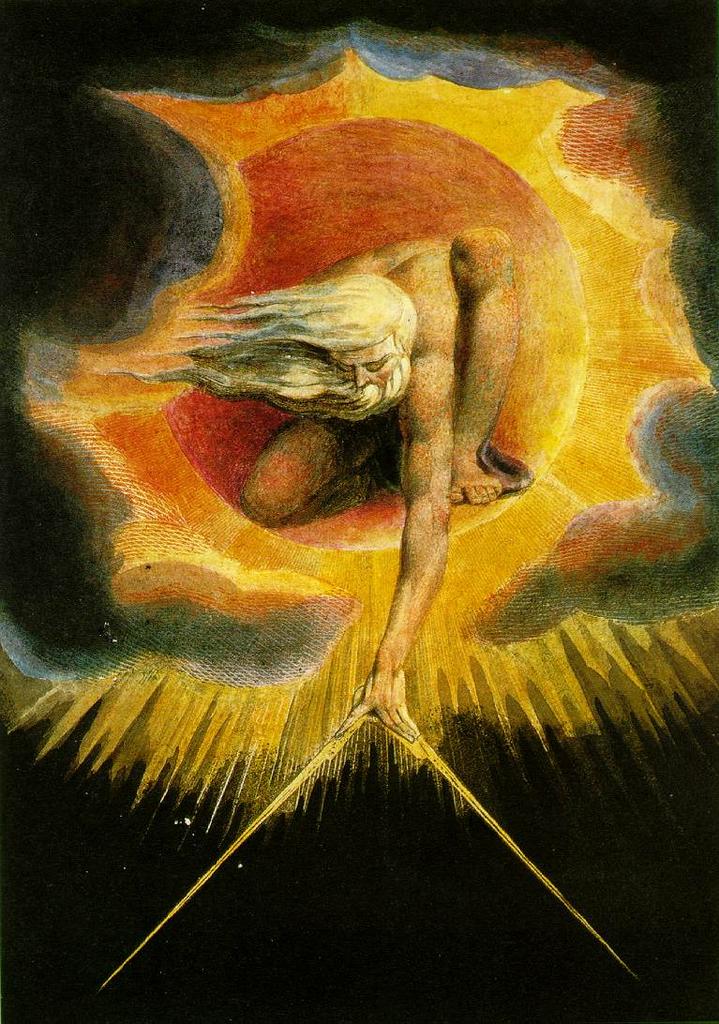
Is parapsychology a pseudo-science? Many believe that the Eighteenth century philosopher David Hume showed, in effect, that it must be. In this article, Terence Penelhum explains and endorses Hume's arguments concerning testimony of the miraculous, but also explains why he believes there is now evidence of sufficient quality concerning the paranormal to make further investigation scientifically worthwhile...more here
Love's Philosophy
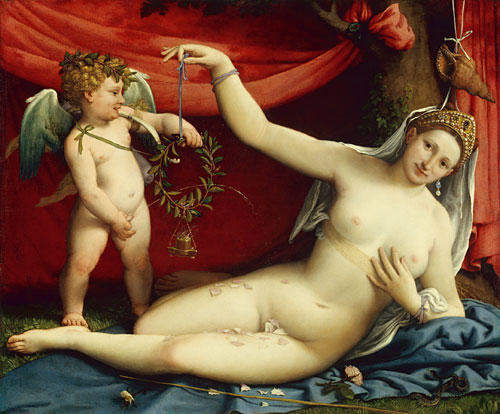
A mighty pain to love it is,
And 't is a pain that pain to miss;
But of all pains, the greatest pain
It is to love, but love in vain.
-from Abraham Crowley's "Anacreon
Nothing in the world is single;
All things by a law divine
In one another's being mingle;—
Why not I with thine?
— from Percy Bysshe Shelley's "Love's Philosophy";
"What then is the nature of man...? Reason, Will, Affection. To a complete man belong the power of thought, the power of will, the power of affection.... We think for the sake of thinking; love for the sake of loving; will for the sake of willing — i.e., that we may be free."
— the German philosopher Ludwig Feuerbach
The job
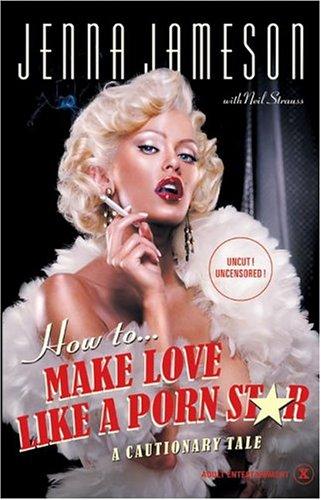
The job of a porn star is not a calling -- or even an option -- for most women. However, if you make the right decisions and set the right boundaries for yourself, it can be a great living, because you'll make a lot of money while doing very little work. And you'll get more experience in front of the camera than a Hollywood actress. Though watching porn may seem degrading to some women, the fact is that it's one of the few jobs for women where you can get to a certain level, look around, and feel so powerful, not just in the work environment but as a sexual being. So fuck Gloria Steinem.
Jenna Jameson is a porn star. Perhaps even the porn star. And despite the title and the occasional pointed advice, How to Make Love Like A Porn Star is not a manual, it's an autobiography. Co-authored with rock writer extraordinaire Neil Strauss (The Dirt with Motley Crüe and The Long Hard Road Out of Hell with Marilyn Manson) Jameson's book is stylishly executed and well paced, a fascinating look at the Jennasis of a beautiful teenager from Las Vegas into the woman with perhaps the most famous breasts -- and other bits -- in the world...more here
Wednesday, July 27, 2005
Joy

There are, as is known, insects that die in the moment of fertilization. So it is with all joy: life's highest, most splendid moment of enjoyment is accompanied by death.
Soren Kierkegaard
Tuesday, July 26, 2005
Jesus story 'gets it 97% right'
It is 97 per cent certain that God raised Jesus Christ from the dead - based on sheer logic and mathematics, not faith - according to Oxford professor Richard Swinburne.
"New Testament scholars say the only evidence is witnesses in the four gospels. That's only 5 per cent of the evidence," Professor Swinburne, one of the world's leading philosophers of religion, said last night.
"We can't judge the question of the resurrection unless we ask first whether there's reason to suppose there is a God, second if we have reason to suppose he would become incarnate and third, if he did, whether he would live the sort of life Jesus did."
Professor Swinburne, in Melbourne to give several seminars and a public lecture at the Australian Catholic University last night, said the mathematics showed a probability of 97 per cent.
This conclusion was reached after a complex series of calculations. In simplified terms, it began with a single proposition: the probability was one in two that God exists.
Next, if God exists, the probability was one in two that he became incarnate. Further, there was a one in 10 probability that the gospels would report the life and resurrection of Jesus in the form they do.
AdvertisementAdvertisement
Finally, the clincher: the probability that we would have all this evidence if it wasn't true was one in 1000.
He argued that any evidence for the existence of God was an argument for the resurrection, and any evidence against the existence of God was an argument against the resurrection.
"Does he have reason to become incarnate? Yes, to make atonement, identify with our suffering and to teach us things, " Professor Swinburne said.
Even Jesus' life is not enough proof, he said. God's signature was needed, which the resurrection was, showing his approval of Jesus' teaching.
The mathematical equations appear in the book, The Resurrection of God Incarnate (OUP, 2003).
"New Testament scholars say the only evidence is witnesses in the four gospels. That's only 5 per cent of the evidence," Professor Swinburne, one of the world's leading philosophers of religion, said last night.
"We can't judge the question of the resurrection unless we ask first whether there's reason to suppose there is a God, second if we have reason to suppose he would become incarnate and third, if he did, whether he would live the sort of life Jesus did."
Professor Swinburne, in Melbourne to give several seminars and a public lecture at the Australian Catholic University last night, said the mathematics showed a probability of 97 per cent.
This conclusion was reached after a complex series of calculations. In simplified terms, it began with a single proposition: the probability was one in two that God exists.
Next, if God exists, the probability was one in two that he became incarnate. Further, there was a one in 10 probability that the gospels would report the life and resurrection of Jesus in the form they do.
AdvertisementAdvertisement
Finally, the clincher: the probability that we would have all this evidence if it wasn't true was one in 1000.
He argued that any evidence for the existence of God was an argument for the resurrection, and any evidence against the existence of God was an argument against the resurrection.
"Does he have reason to become incarnate? Yes, to make atonement, identify with our suffering and to teach us things, " Professor Swinburne said.
Even Jesus' life is not enough proof, he said. God's signature was needed, which the resurrection was, showing his approval of Jesus' teaching.
The mathematical equations appear in the book, The Resurrection of God Incarnate (OUP, 2003).
The Black Book of Religion
A Black Book of Religion, documenting the grievous offenses perpetrated in the name of God. The suicide bombers who have sown mayhem in Iraq, the Islamists who last year shredded railway passengers in Spain, or the demented Muslim who recently shot and stabbed a Dutch filmmaker, then pinned a note to his bleeding body boasting of his deed, are but current examples of an uncomfortable paradox. Few humans stoop lower, seemingly, than those whose gaze is fixed on heaven. The same transcendent epiphany that animates saints can perversely transform others into devils. Just how and why Dr. Jekyll becomes Mr. Hyde surely deserves keener attention from the devout of all faiths, or so it seems to me.
What follows is a prospectus, humbly submitted by a troubled secularist...more here
What follows is a prospectus, humbly submitted by a troubled secularist...more here
Who's Soren Now?
A battle is raging between two Danish scholars over the status of a prize-winning biography of Søren Kierkegaard that appeared in English translation in February of this year. Princeton University Press has called Søren Kierkegaard: A Biography “the definitive account of Kierkegaard's life”. Publishers Weekly calls it “monumental and magisterial”, and an American Kierkegaard scholar writing in The Wall Street Journal called it “superb”. Another scholar, writing in the Times Literary Supplement, said that while it was hard to imagine what a new biography of Kierkegaard might consist of, this most recent work had solved that problem “masterfully”. Danish reviewers have been similarly extravagant in their praise. A reviewer for the Danish newspaper Politiken asserted that no other biography “would ever even approach it, much less surpass it”.
The biography received the prestigious Georg Brandes Prize and the Danish newspaper Weekendavisen 's literary prize. It is in its fifth Danish edition. Since its publication in Denmark in 2000, it has been translated into German, Swedish, Norwegian, Hungarian, and now English. The George Brandes prize selection committee said they chose the work because of its “academic thoroughness” and because of the “rigour of the standards of verification to which it adhered”...more here
The biography received the prestigious Georg Brandes Prize and the Danish newspaper Weekendavisen 's literary prize. It is in its fifth Danish edition. Since its publication in Denmark in 2000, it has been translated into German, Swedish, Norwegian, Hungarian, and now English. The George Brandes prize selection committee said they chose the work because of its “academic thoroughness” and because of the “rigour of the standards of verification to which it adhered”...more here
Immerse Yourself
I thank God that I am not dictator of the world. There would be perks. All of that sex, and being able to watch the opera from a seat at the front rather than standing at the back. But to spend one's life surrounded by flunkies and cronies, terrified of one's power and yet trying to feather their own nests – how awful! All a bit like the upper echelons of university administrations.
However, if I were world dictator, I know what would be my first action. It would be to abolish undergraduate degrees in philosophy. I would allow some courses – I might make it a necessary condition of getting a degree to take a course or two – and I might even allow minors. But there would be no one majoring in philosophy.
Given the fact that I am just completing my fortieth year as a philosophy professor, this must sound like a severe case of self hatred. You may think that I have so little regard for myself and my subject that I want to eliminate it from the curriculum, and hope eventually to starve it to death. This is far from being the case. Indeed, I am right there with Plato in thinking that philosophy is simply the most important subject there is. The unexamined life indeed is not worth living. There are times indeed when I do wish I were a man of action – an orthopedic surgeon or a firefighter – but I like to console myself by thinking everything and everyone else exists to make philosophers possible. We are at the peak of humankind...more here
However, if I were world dictator, I know what would be my first action. It would be to abolish undergraduate degrees in philosophy. I would allow some courses – I might make it a necessary condition of getting a degree to take a course or two – and I might even allow minors. But there would be no one majoring in philosophy.
Given the fact that I am just completing my fortieth year as a philosophy professor, this must sound like a severe case of self hatred. You may think that I have so little regard for myself and my subject that I want to eliminate it from the curriculum, and hope eventually to starve it to death. This is far from being the case. Indeed, I am right there with Plato in thinking that philosophy is simply the most important subject there is. The unexamined life indeed is not worth living. There are times indeed when I do wish I were a man of action – an orthopedic surgeon or a firefighter – but I like to console myself by thinking everything and everyone else exists to make philosophers possible. We are at the peak of humankind...more here
Saturday, July 23, 2005
Put your sweet lips . . .

In what must still be the longest single work devoted to the kiss — Opus Polyhistoricum . . . de Osculis — the German polymath Martin von Kempe (1642-83) assembled 1,040 closely packed pages of excerpts from classical, biblical, legal, medical and other learned sources to form a sort of encyclopaedia of kissing. He listed more than 20 types of kiss. These included the kiss of veneration, the kiss of peace, the kisses bestowed by Christians on images and relics, and by pagans on idols, the kissing of the Pope’s foot, the kiss bestowed by superiors on inferiors, the kiss used in academic degree ceremonies, the lovers’ kiss, the lustful and adulterous kiss, the kiss exchanged by couples sealing their marriage vows, the kiss of reconciliation, the kiss carrying contagion, the hypocritical kiss and the kiss of Judas...more here
Friday, July 22, 2005
It's a thing that happens to you
"It's a thing that happens to you. When a child loves you for a long, long time, not just to play with, but REALLY loves you, then you become Real.... You become. It takes a long time. That's why it doesn't happen often to people who break easily, or have sharp edges, or who have to be carefully kept. Generally, by the time you are Real, most of your hair has been loved off, and your eyes drop out and you get loose in your joints and very shabby. But these things don't matter at all, because once you are Real you can't be ugly, except to people who don't understand."— wisdom from the Skin Horse in Margery Williams Bianco's children's classic, The Velveteen Rabbit, or How Toys Become Real
The Sexual Politics of Breasts

It’s not often that you can accuse the Sun of sensitivity. But it did display unexpected tact the day the front page was devoted to Kylie Minogue’s breast cancer: it dropped the Page Three pin–up. Presumably they didn’t want to offend readers with any reminder that those pert, cheeky playthings can also harbour sinister hidden routes of dangerously connective hormones.
In fact, the Sun doesn’t savour any association with breasts other than titillation. A couple of months ago it ran a campaign to get Britney Spears to wear a bra because now that she’s pregnant hers are beginning to sag. And that’s disgusting.
The extent of this division between the breast’s erotic and nurturing functions seems an acute barometer of a culture’s well–being. In America, the spiritual home of the breast fetish, the separation has reached massive proportions. Women are so castigated for breastfeeding that determined mothers have resorted to forming associations like the Militant Breastfeeding Cult and Inciteful Mamas...more here
..
Celebrity Psychos

Our celebrities are mad as hell, and they’re not going to take it anymore. They’re on a dangerous rampage, and no one is safe. Christian Slater grabbed a woman’s bottom outside an Upper East Side deli, and Russell Crowe had a tantrum lengthy enough for him to rip a phone out of the wall, take it down the elevator, and throw it into the face of a clerk at the city’s most exclusive hotel. Dave Chappelle beat a quick path from his final Comedy Central tapings to South Africa, explaining he needed to go visit a friend, and Brad Pitt dyed his hair platinum (he got it done by Jen’s hairdresser!), played public footsie with Angelina Jolie, and paid the price with viral meningitis. Courtney Love, the patron saint of celebrity craziness, has been quiet lately, but getting larger. Who knows when she may erupt again. This summer, all outbreaks are only sideshows to the concurrent breakdown of Michael Jackson during his trial and the more recent mania of Tom Cruise, two of the biggest and most mysterious stars in the world unmasked as stark-raving lunatics. (The reeducation of Katie Holmes, the Manchurian Fiancée, continues apace.) Attack or be attacked: The other week, Leonardo DiCaprio was hanging out at a house party in the Hollywood Hills when one of the female guests hit him in the face with a bottle...more here
Thursday, July 21, 2005
Possibility

"When you give someone a book, you don't give him just paper, ink, and glue. You give him the possibility of a whole new life." - Christopher Morley
The Greatest Sentence
I move my lips when I read a well-written sentence. It surprises me that this is considered a hallmark of stupidity, as though I were still trapped in a regressive state where I had to sound out syllables to discover meaning. I am mouthing the words as I consume them so I can assimilate them, to make them my own. I am relishing the taste of good words...more here
Buddhists, Existentialists and Situationists: Waking up in Waking Life
Richard Linklater's 2002 film Waking Life is all about dreaming, and how we can sometimes control our dreams when they're lucid. Yet it's also about some broad philosophical issues, including one of the oldest philosophical conundrums, the distinction between appearance and reality. When René Descartes sat at his stove and meditated on the world and on whether an evil demon controlled everything he perceived, he wondered, what's more real, dreams or waking life? The diverse collection of characters in Linklater's film ask the same question. Yet they ask it not just in a literal sense, but also as a metaphor for the nature of modern culture and for the human condition as a whole - in what ways do we fall asleep even while awake? How can we lead a life that is more awake, more aware of people and things, more authentic? The film provides the outlines of three wake-up calls to three more-or-less separate ways in we sleep too easily.
This issue is not new. It goes all the way back to Plato's Allegory of the Cave: what if you were chained in a dimly-lit cave your whole life where you saw only the shadows of real things passing by the entrance to your cave reflected on its back wall? Suddenly, you're freed, and come into the sunlight. Would you recognize this new world as more real than your cave? And would you be able to convince those still enchained in the cave that there was a greater world outside their dwelling? Would you be able, in Plato's terms, to wake up to reality?...more here
This issue is not new. It goes all the way back to Plato's Allegory of the Cave: what if you were chained in a dimly-lit cave your whole life where you saw only the shadows of real things passing by the entrance to your cave reflected on its back wall? Suddenly, you're freed, and come into the sunlight. Would you recognize this new world as more real than your cave? And would you be able to convince those still enchained in the cave that there was a greater world outside their dwelling? Would you be able, in Plato's terms, to wake up to reality?...more here
Wednesday, July 20, 2005
Nonsense in vogue
Students of language have long argued that common usages of words are as important as official definitions, since words often soak up assumptions of the day. This causes problems when commonplace usages of words override all other possible meanings. As Francis Bacon observed, language can trick us into uncritically accepting assumptions associated with particular words--a fallacy he called the "idol of the marketplace."
Consider the common advice that "we must be careful not to generalize." This adage implies that generalization is inherently wrong and we should take special care to avoid it. Yet generalization is needed to understand the complex world we live in, and science and rational thought would be impossible without it. In addition, note the paradox that the statement "we must be careful not to generalize" is itself a generalization, so we would disobey the advice if we followed it! Clearly, words like generalization carry unstated cultural assumptions that confuse rather than clarify discussions...more here
Consider the common advice that "we must be careful not to generalize." This adage implies that generalization is inherently wrong and we should take special care to avoid it. Yet generalization is needed to understand the complex world we live in, and science and rational thought would be impossible without it. In addition, note the paradox that the statement "we must be careful not to generalize" is itself a generalization, so we would disobey the advice if we followed it! Clearly, words like generalization carry unstated cultural assumptions that confuse rather than clarify discussions...more here
Why Marx is man of the moment
A penniless asylum seeker in London was vilified across two pages of the Daily Mail last week. No surprises there, perhaps - except that the villain in question has been dead since 1883. 'Marx the Monster' was the Mail's furious reaction to the news that thousands of Radio 4 listeners had chosen Karl Marx as their favourite thinker. 'His genocidal disciples include Stalin, Mao, Pol Pot - and even Mugabe. So why has Karl Marx just been voted the greatest philosopher ever?'...more here
Tuesday, July 19, 2005
Nabokov's Pale Fire
John Shade's "Pale Fire" opens with an extraordinary series of images whose initial impact lingers in the mind as it expands in implication throughout the poem:
I was the shadow of the waxwing slain
By the false azure in the windowpane;
I was the smudge of ashen fluff--and I
Lived on, flew on, in the reflected sky.
As we learn more about Shade's lifelong attempt to understand a world where life is surrounded by death, we realize the full resonance of these opening lines: that he is projecting himself in imagination into the waxwing, as if it were somehow still flying beyond death, and into the reflected azure of the window, as if that were the cloudlessness of some hereafter, even as he stands looking at "the smudge of ashen fluff" of the dead bird's little body... more
I was the shadow of the waxwing slain
By the false azure in the windowpane;
I was the smudge of ashen fluff--and I
Lived on, flew on, in the reflected sky.
As we learn more about Shade's lifelong attempt to understand a world where life is surrounded by death, we realize the full resonance of these opening lines: that he is projecting himself in imagination into the waxwing, as if it were somehow still flying beyond death, and into the reflected azure of the window, as if that were the cloudlessness of some hereafter, even as he stands looking at "the smudge of ashen fluff" of the dead bird's little body... more
The Cradle Rocks above an Abyss
The cradle rocks above an abyss, and common sense tells us that our existence is but a brief crack of light between two eternities of darkness. Although the two are identical twins, man, as a rule, views the prenatal abyss with more calm than the one he is heading for (at some forty-five hundred heart-beats an hour). I know, however, of a young chronophobiac who experienced something like panic when looking for the first-time at home-made movies that had been taken a few weeks before his birth. He saw a world that was practically unchanged—the same house, the same people—and then realized that he did not exist there at all and nobody mourned his absence. He caught a glimpse of his mother waving from an upstairs window, and that unfamiliar gesture disturbed him, as if it were some mysterious farewell. But what particularly frightened him was the sight of a brand-new baby-carriage standing there on the porch, with the smug, encroaching air of a coffin; even that was empty, as if in the reverse course of events, his very bones had disintegrated.
The opening paragraph of Nabokov's Speak, Memory
The opening paragraph of Nabokov's Speak, Memory
Allegorical Underworld

Kontroll is an energetic piece of pulp fiction that, still working with old-fashioned film stock and locations, constructs its allegorical Sin City of Dreadful Night in the depths of the Budapest subway system... more
The book to end all books
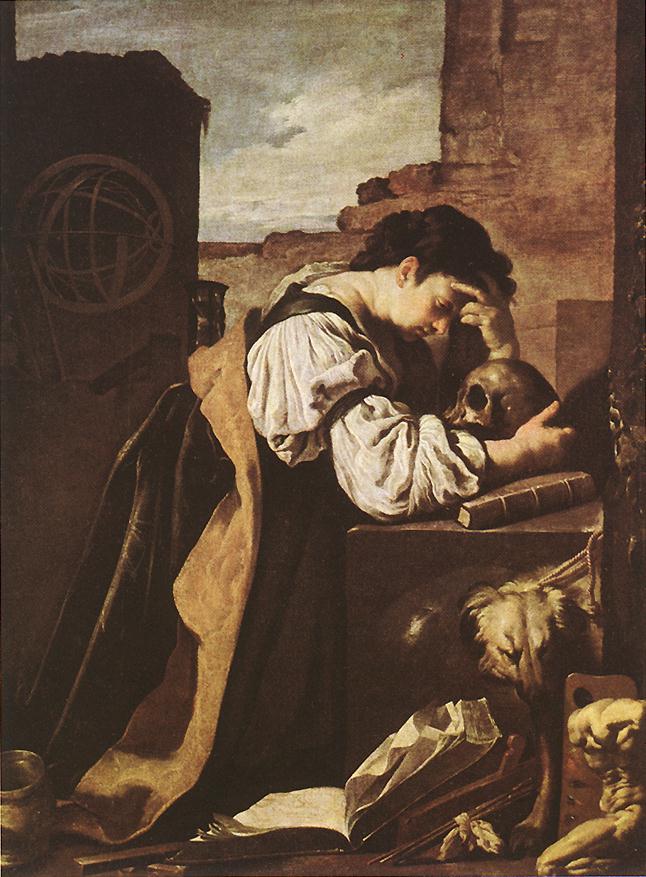
Paperback not so much of the week as of the year, of the decade - or, I am inclined to say, of all time. And why? Because it's the best book ever written, that's why. I use the word "book" with care. It's not a novel, a tract, an epic poem, a history; it is, quite self-consciously, the book to end all books. Made out of all the books that existed in a 17th-century library, it was compiled in order to explain and account for all human emotion and thought. It is not restricted to melancholy, or, as we call it today, depression; but then a true study of it will have to be - if you have the learning and the stamina - about everything. That is why there are about 1,400 pages in this edition, why the only other edition, from Clarendon Press, runs to three volumes (it also costs a bomb compared to this and is, anyway, out of print), and why Burton never, strictly speaking, finished it: there was always something else to go in...more
Saturday, July 09, 2005
The Bits
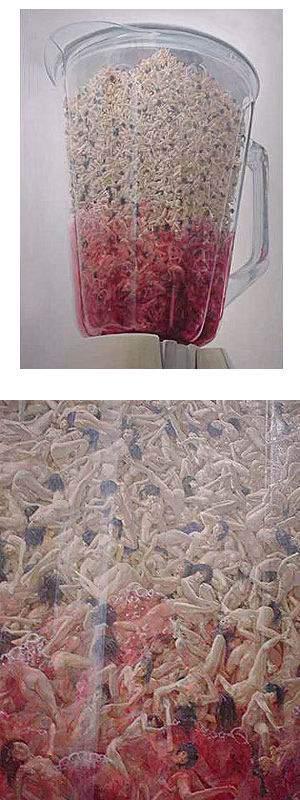
At death, you break up: the bits that were you
Start speeding away from each other for ever
With no one to see.
Philip Larkin (1922–1986), British poet. “The Old Fools.”
Sunday, July 03, 2005
If Only
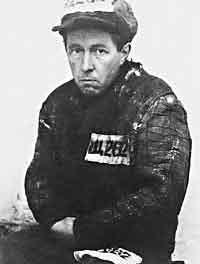
“If only there were evil people somewhere insidiously committing evil deeds, and it were necessary only to separate them from the rest of us and destroy them. But the line dividing good and evil cuts through the heart of every human being. And who is willing to destroy a piece of his own heart?”
— Alexsandr Solzhenitsyn, who returned to Russia in 1994, choosing to go by a route across the Siberia of his Gulag days
At a Certain Age

We wanted to confess our sins but there were no takers.
White clouds refused to accept them, and the wind
Was too busy visiting sea after sea.
We did not succeed in interesting the animals.
Dogs, disappointed, expected an order,
A cat, as always immoral, was falling asleep.
A person seemingly very close
Did not care to hear of things long past.
Conversations with friends over vodka or coffee
Ought not be prolonged beyond the first sign of boredom.
It would be humiliating to pay by the hour
A man with a diploma, just for listening.
Churches. Perhaps churches. But to confess there what?
That we used to see ourselves as handsome and noble
Yet later in our place an ugly toad
Half-opens its thick eyelid
And one sees clearly: "That's me."Czeslaw Milosz (Nobel, 1980)
Rendezvous with Death

Among those killed in action on this day in 1916 at the Battle of the Somme was Alan Seeger (uncle of Pete Seeger), a twenty-eight-year-old poet who had gone to live in Left Bank Paris, and had joined the French Foreign Legion in order to fight in the war. From Seeger's "Rendezvous with Death":
I have a rendezvous with Death
At some disputed barricade,
When Spring comes back with rustling shade
And apple-blossoms fill the air —
I have a rendezvous with Death
When Spring brings back blue days and fair.
Friday, June 24, 2005
American Psycho

American Psycho: Killer Collector Edition should be a necessary part of any well-to-do Wall Street Vice President DVD collection. If you don't fit that category and are a bartender, artist, homeless person, or other pointless individual, than I would like to a) stab you in the face and play with your blood and b) recommend this movie to you as well. No film delves into the pathological mentality of the elite in American culture with as much irony, sardonic humor progressive shifts of brilliance and ridicule as American Psycho.

Wednesday, June 22, 2005
Death Notices
"If things went according to the death notices, man would be absolutely perfect. There you find only first-class fathers, immaculate husbands, model children, unselfish, self-sacrificing mothers, grandparents mourned by all, businessmen in contrast with whom Francis of Assisi would seem an infinite egoist, generals dripping with kindness, humane prosecuting attorneys, almost holy munitions makers — in short, the earth seems to have been populated by a horde of wingless angels without one's having been aware of it."
Erich Maria Remarque, in his novel, The Black Obelisk (1956)
Erich Maria Remarque, in his novel, The Black Obelisk (1956)
Monday, June 20, 2005
Refugees

In front of my tilting cage that little hut of plastics, so not to suffer from loneliness, I travelled far and wide all in my thought. I went back to the remote past, our home and its vicinities, grandma and her stories of my great grandfather, those mighty warriors from whom I inherited intolerance and pride. I travelled far and wide all in my thought. I went far into the future, into my dreams and high hopes. To see what was there, where this changeless passage of time, where this endless kick of my heels, could possibly one day lead. I travelled far and wide, all in my though I also travelled to eternity, to see my soul at the end of this mess. I travelled far and wide, All in my thought.
Today is World Refugee Day. This poem by Giddi Abamegal, an Oromo refugee in Kenya, is published in Tilting Cages: A Collection of Refugee Writings, edited by Noomi Flutter and Carl Solomon. The photograph of Kenyan refugees is by Sebastiao Salgado (The Children, Aperture Books, 2000).
Sunday, June 19, 2005
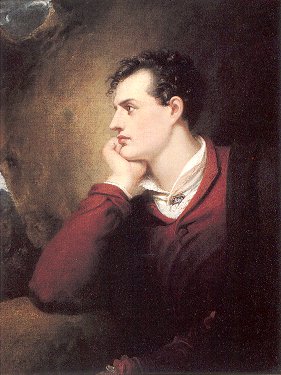
"Words are things; and a small drop of ink / Falling like dew upon a thought, produces / That which makes thousands, perhaps millions, think." - Lord Byron
Wednesday, June 15, 2005

Where My Books go
ALL the words that I utter,
And all the words that I write,
Must spread out their wings untiring,
And never rest in their flight,
Till they come where your sad, sad heart is,
And sing to you in the night,
Beyond where the waters are moving,
Storm-darken'd or starry bright.
William Butler Yeats
June 13, 1865 � January 28, 1939
Tuesday, June 14, 2005
A Culture of Death
In 1990 David Lewis, a Vancouver man living with HIV, went to a local newspaper and announced that he had assisted eight friends, all suffering from AIDS, in committing suicide--an act of murder in the eyes of Canadian law. For many people, the news simply affirmed what they had long suspected was happening in the AIDS community. But to Russel Ogden, a criminology graduate student at Simon Fraser University looking for a research project, it was an opportunity to go where no scientist had ventured before.
"I had a population in my backyard that had been living with euthanasia issues for some time," recalls Ogden, who is believed by many to be the first researcher in North America to have formally studied the practices of underground assisted suicide and euthanasia. In 1994 Ogden published his master's thesis, which documented the inner workings of this illicit network. The findings shocked the nation and branded him one of Canada's most controversial researchers...more here
"I had a population in my backyard that had been living with euthanasia issues for some time," recalls Ogden, who is believed by many to be the first researcher in North America to have formally studied the practices of underground assisted suicide and euthanasia. In 1994 Ogden published his master's thesis, which documented the inner workings of this illicit network. The findings shocked the nation and branded him one of Canada's most controversial researchers...more here
The Neurotic Artist
On the flight across the Atlantic, I had browsed in a paperback version of Kierkegaard's Diaries. How grim they are. Kierkegaard describes self-loathing, pessimism, dread, isolation, guilt, and anomie. He writes of wanting to shoot himself. Kierkegaard complains of a "primitive melancholy ... a huge dowry of distress." He writes, "My whole past life was in any case so altogether cloaked in the darkest melancholy, and in the most profoundly brooding of misery's fogs, that it is no wonder I was as I was." And then: "How terrible to have to buy each day, each hour -- and the price varies so!" And again: "The sad thing with me is that the crumb of joy and reassurance I slowly distill in the painstakingly dyspeptic process of my thought-life I use up straightaway in just one despairing step."...more here
Jorge Luis Borges

Jorge Luis Borges died on this day in 1986. The scene and quotation carved on his gravestone are based upon a favorite Anglo-Saxon poem, "The Battle of Maldon." The quotation translates as "let them not fear a thing," words spoken by the Anglo-Saxon leader to his warriors as they prepared to fight Viking invaders in Essex. In "Elegy," Borges pictures a man who has sailed the world and then returned "to the ancient lands of his forebears": ...to Andalucia, to Portugal and to those counties
where the Saxon warred with the Dane and they
mixed their blood,
to have wandered through the red and tranquil
labyrinth of London,
to have grown old in so many mirrors,
to have sought in vain the marble gaze of the statues,
to have questioned lithographs, encyclopedias,
atlases,
to have seen the things that men see,
death, the sluggish dawn, the plains,
and the delicate stars,
and to have seen nothing, or almost nothing
except the face of a girl from Buenos Aires
a face that does not want you to remember it.
Oh destiny of Borges,
perhaps no stranger than your own.
Monday, June 13, 2005
Fernando Pessoa
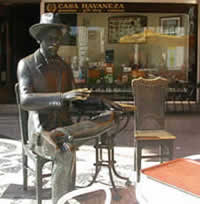
Fernando Pessoa, born on this day in 1888, is regarded as Portugal's most important 20th century poet, though he published very little in his lifetime. After his death in 1935, over 25,000 poems, letters and other bits were found in a trunk, written by Pessoa and his handful of "heteronyms" � sustained fictitious personas, each given a distinct biography and writing style by their creator. The postmodern result, say the critics, is "one of the most remarkable bodies of work of the century." Pessoa himself was a man of reclusive, legendary oddness among Lisbon's caf�s, where he continues to sit today.
Tuesday, June 07, 2005
DVD OF THE WEEK

When scholars talk about the 70s music revolution, their names hardly ever come up. Everyone references the Ramones and the Sex Pistols, pushing backward to encapsulate the New York Dolls and The Velvet Underground, and forward to take in the Clash and the Jam. But forgotten in the face of punk�s do-it-yourself upheaval was the real sonic shift, a move away from guitars and raw power to cold and calculated electronics. These were bands that drew their inspiration not from the rebel rebels of the 50s, or the garage gangs of the 60s. No, these inspired artists found their muse in the mechanical mantras of Kraftwerk, and in the pure pop presence of disco�s emerging dance beat.
So as London suffered through a post-jubilee filled with anarchy and aggression, Sheffield slowly but surely grew into a Mecca for the new and novel synthesizer experience. Out of a core group of friends and schoolmates came a noise so unique, so unlike what was being peddled on both radio and in the riot clubs that it took a few full years to catch on. But once it did, it set a standard for recorded insurgency that would last for decades to come. Everyone points to Johnny Rotten�s sneer, Sid Viscous�s violent nature, or Joe Strummer�s considered politics as the true essence of the 70s seismic rock and roll mutiny. But it was really the twisting of knobs and the modulating of sound waves that caused the greatest disorder. It was a sound so foreign it could only come from outside the domain of London. Indeed, it was a noise Made in Sheffield...more here
Thursday, June 02, 2005
Paris Hilton Engagement
So, who’s not excited about the Paris Hilton engagement? This is potentially a bettor’s dream with odds firing out from everywhere as to when, where, or how Ms. Hilton could impress a very rich man like Paris Latsis so much that he’d actually set himself up for what seems to be a miserable life filled with emasculation and infidelity. But stranger things have happened in the world of gambling, especially when it comes to Paris, whom is angling to have the only wedding dress that shows off a significant amount of camel toe.
After the jump, Oddjack pulls together some of the hottt, sticky Paris action we’re likely to see in the coming months from the bookmaker’s point of view...more here
After the jump, Oddjack pulls together some of the hottt, sticky Paris action we’re likely to see in the coming months from the bookmaker’s point of view...more here
Tabloid Talk Shows and Sexual Nonconformity
Question: The recent brouhaha about the Jerry Springer Show suggests that we ought to be suspicious about everything portrayed on these tabloid TV talk shows. What do you think? You talked to hundreds of guests, producers, and viewers in your research for this book. How much is staged? What's credible, what isn't?
Joshua Gamson: The short answer is: a lot of it is loosely scripted, and there's plenty of room for fake guests to make it on the air, but the vast majority of guests are "real" people who want to be on television. The producers are very competitive with one another, they have to produce multiple shows a week, they field calls from thousands of prospective guests, and they don't have all that much invested in "the truth." So it's easy enough to fake them out. But from the producers' point of view, the point is less to be credible than to be amusing and at least plausibly true...more here
Joshua Gamson: The short answer is: a lot of it is loosely scripted, and there's plenty of room for fake guests to make it on the air, but the vast majority of guests are "real" people who want to be on television. The producers are very competitive with one another, they have to produce multiple shows a week, they field calls from thousands of prospective guests, and they don't have all that much invested in "the truth." So it's easy enough to fake them out. But from the producers' point of view, the point is less to be credible than to be amusing and at least plausibly true...more here
SØREN KIERKEGAARD: A Biography
For many, the mention of Søren Kierkegaard (1813-1855) brings to mind a Danish thinker faintly recalled from dim memories of an introductory philosophy class. For others, the name is immediately associated with existentialism and phrases such as "subjectivity as truth" and "leap of faith."
Few philosophers have gained more fame for positions they seldom embraced than Kierkegaard. In the history of philosophy, he has been portrayed as an anti-Hegelian, the "father of existentialism" and the precursor of deconstruction.
Even today, many interpreters limit their readings of Kierkegaard to his perceived antipathy to Georg W.F. Hegel, the German philosopher who constructed a complex, sometimes torturous philosophical system that declared that truth could be reached only by using reason and objectivity. His writings seemed distant, abstract and removed from the real world. Kierkegaard, by contrast, proclaimed that each person was engaged in an individual quest for truth in the stages along life's way. While their approaches to truth indeed differ substantially, Kierkegaard never thought of himself as an anti-Hegelian, and he praised some of Hegel's readings as much as he criticized others. The real difference between the two is Kierkegaard's lively, poetic writing style as against Hegel's more formal, turgid style.
In the middle of the 20th century, the existentialists Sartre and Camus embraced Kierkegaard as one of their own.Near the dawn of the 21st century, Jacques Derrida and some deconstructionists have, in turn, claimed Kierkegaard as their darling...more here
Few philosophers have gained more fame for positions they seldom embraced than Kierkegaard. In the history of philosophy, he has been portrayed as an anti-Hegelian, the "father of existentialism" and the precursor of deconstruction.
Even today, many interpreters limit their readings of Kierkegaard to his perceived antipathy to Georg W.F. Hegel, the German philosopher who constructed a complex, sometimes torturous philosophical system that declared that truth could be reached only by using reason and objectivity. His writings seemed distant, abstract and removed from the real world. Kierkegaard, by contrast, proclaimed that each person was engaged in an individual quest for truth in the stages along life's way. While their approaches to truth indeed differ substantially, Kierkegaard never thought of himself as an anti-Hegelian, and he praised some of Hegel's readings as much as he criticized others. The real difference between the two is Kierkegaard's lively, poetic writing style as against Hegel's more formal, turgid style.
In the middle of the 20th century, the existentialists Sartre and Camus embraced Kierkegaard as one of their own.Near the dawn of the 21st century, Jacques Derrida and some deconstructionists have, in turn, claimed Kierkegaard as their darling...more here
Fear: The Foundation of Every Government's Power
[S]ince love and fear can hardly exist together, if we must choose between them, it is far safer to be feared than loved.
—Niccolò Machiavelli, The Prince, 1513
All animals experience fear—human beings, perhaps, most of all. Any animal incapable of fear would have been hard pressed to survive, regardless of its size, speed, or other attributes. Fear alerts us to dangers that threaten our well-being and sometimes our very lives. Sensing fear, we respond by running away, by hiding, or by preparing to ward off the danger.
To disregard fear is to place ourselves in possibly mortal jeopardy. Even the man who acts heroically on the battlefield, if he is honest, admits that he is scared. To tell people not to be afraid is to give them advice that they cannot take. Our evolved physiological makeup disposes us to fear all sorts of actual and potential threats, even those that exist only in our imagination...more here
—Niccolò Machiavelli, The Prince, 1513
All animals experience fear—human beings, perhaps, most of all. Any animal incapable of fear would have been hard pressed to survive, regardless of its size, speed, or other attributes. Fear alerts us to dangers that threaten our well-being and sometimes our very lives. Sensing fear, we respond by running away, by hiding, or by preparing to ward off the danger.
To disregard fear is to place ourselves in possibly mortal jeopardy. Even the man who acts heroically on the battlefield, if he is honest, admits that he is scared. To tell people not to be afraid is to give them advice that they cannot take. Our evolved physiological makeup disposes us to fear all sorts of actual and potential threats, even those that exist only in our imagination...more here
Collective Memory and the Holocaust
On May 10 New York architect Peter Eisenman officially unveiled his Memorial to the Murdered Jews of Europe in Berlin: 2,711 concrete pillars, ranging in height from three to sixteen feet, rise up at subtly varying angles in a vast field in the city center. A grid of narrow alleys weaves through the pillars, undulating at times gently, at times steeply. Ever since the space was first chosen for a Holocaust memorial in 1992--when it was a vacant expanse between the Brandenburg Gate and Potsdamer Platz, part of the no-man's-land once occupied by Hitler's bunker and traversed by the Berlin wall--it has served as a kind of projection screen or free-fire zone for German controversies about the politics of collective memory: Should there be a reminder of Nazi atrocities in the center of the German capital?...more here
Ten Most Harmful Books of the 19th and 20th Centuries
HUMAN EVENTS asked a panel of 15 conservative scholars and public policy leaders to help us compile a list of the Ten Most Harmful Books of the 19th and 20th Centuries. Each panelist nominated a number of titles and then voted on a ballot including all books nominated. A title received a score of 10 points for being listed No. 1 by one of our panelists, 9 points for being listed No. 2, etc. Appropriately, The Communist Manifesto, by Karl Marx and Friedrich Engels, earned the highest aggregate score and the No. 1 listing...more here
Wednesday, May 25, 2005
Retro Videos
If you've ever tried to search for videos on that ham radio they call the World Wide Web, you'll appreciate the value of having hundreds of them gathered here for your convenience. Everything from Dean Martin to Everything But The Girl, and the list keeps getting longer by the day...more here
Creationism: God's gift to the ignorant
Science feeds on mystery. As my colleague Matt Ridley has put it: “Most scientists are bored by what they have already discovered. It is ignorance that drives them on.” Science mines ignorance. Mystery — that which we don’t yet know; that which we don’t yet understand — is the mother lode that scientists seek out. Mystics exult in mystery and want it to stay mysterious. Scientists exult in mystery for a very different reason: it gives them something to do.
Admissions of ignorance and mystification are vital to good science. It is therefore galling, to say the least, when enemies of science turn those constructive admissions around and abuse them for political advantage. Worse, it threatens the enterprise of science itself. This is exactly the effect that creationism or “intelligent design theory” (ID) is having, especially because its propagandists are slick, superficially plausible and, above all, well financed. ID, by the way, is not a new form of creationism. It simply is creationism disguised, for political reasons, under a new name...more here
Admissions of ignorance and mystification are vital to good science. It is therefore galling, to say the least, when enemies of science turn those constructive admissions around and abuse them for political advantage. Worse, it threatens the enterprise of science itself. This is exactly the effect that creationism or “intelligent design theory” (ID) is having, especially because its propagandists are slick, superficially plausible and, above all, well financed. ID, by the way, is not a new form of creationism. It simply is creationism disguised, for political reasons, under a new name...more here
Tuesday, May 24, 2005
Madame Bovary's Ovaries
What if Charles Darwin wrote a novel? What if he wrote them all? Well, maybe he did, in a sense; the thesis of "Madame Bovary's Ovaries" is that Darwin, or rather the forces of evolution and natural selection that Darwin did write of, underlie the plot and behavior of all human characters in literature. It's the kind of all-encompassing theorizing, both radical and obvious at the same time, that is likely to enlighten some and seriously upset others.
David Barash is a well-known zoologist at the University of Washington, and his daughter Nanelle is a student at Swarthmore. They call their perspective that of "evolutionary psychology," but it's also been termed "sociobiology." Almost 30 years ago, a massive tome bearing that title by famed Harvard biologist E. O. Wilson posited that human behavior has a strong genetic component, and set off a firestorm of criticism, both scientific and, especially, political. A number of subsequent books, such as Richard Dawkins' "The Selfish Gene," have explored this perspective with similarly controversial results. Many of us don't like having our most important feelings and actions reduced to biological imperatives -- we like to feel apart and above other species. Just look at the art and literature we produce as proof of our difference, we argue...more here
David Barash is a well-known zoologist at the University of Washington, and his daughter Nanelle is a student at Swarthmore. They call their perspective that of "evolutionary psychology," but it's also been termed "sociobiology." Almost 30 years ago, a massive tome bearing that title by famed Harvard biologist E. O. Wilson posited that human behavior has a strong genetic component, and set off a firestorm of criticism, both scientific and, especially, political. A number of subsequent books, such as Richard Dawkins' "The Selfish Gene," have explored this perspective with similarly controversial results. Many of us don't like having our most important feelings and actions reduced to biological imperatives -- we like to feel apart and above other species. Just look at the art and literature we produce as proof of our difference, we argue...more here
WHOSE BIBLE IS IT?
Many authors who write about the Bible are so tendentious that their books are worthless; other writers are thoughtful and well-meaning but nonetheless argue as much from faith as from evidence. Which is why any syllabus of religion reading should begin with a book that teaches humility, reminding us how difficult it is even for the faithful to get at God's words. After all, God is perfect, but translators and scribes are not. One such book is Whose Bible Is It ?, a new history of how the Bible was written, redacted and translated into its present editions, written by the esteemed church historian Jaroslav Pelikan.
The book is far from perfect, but fortunately Pelikan is at his best where most readers will be at their worst: in antiquity. He begins with lucid, succinct explanations of the Hebrew Bible's translation into its first Greek edition, known as the Septuagint, then into Jerome's Latin version, the Vulgate. A fluent reader of Hebrew, Greek and Latin (and, for what it's worth, German, Italian, French, Russian, Slavonic and Czech), Pelikan is good at unsettling our notions of what the Bible really says. By the end of the 4th century, there were competing Hebrew, Latin and Greek versions of every major book of the Bible, and almost nobody could read them all and compare. Few Greeks would know, as Pelikan does, that what they read as "They have pierced my hands and feet," a line from the 22nd psalm that Jesus cries on the cross in the New Testament, was originally rendered by Hebrew scribes as "Like lions [they maul] my hands and feet" -- which, lacking the "piercing," seems much less like an Old Testament foreshadowing of the crucifixion...more here
The book is far from perfect, but fortunately Pelikan is at his best where most readers will be at their worst: in antiquity. He begins with lucid, succinct explanations of the Hebrew Bible's translation into its first Greek edition, known as the Septuagint, then into Jerome's Latin version, the Vulgate. A fluent reader of Hebrew, Greek and Latin (and, for what it's worth, German, Italian, French, Russian, Slavonic and Czech), Pelikan is good at unsettling our notions of what the Bible really says. By the end of the 4th century, there were competing Hebrew, Latin and Greek versions of every major book of the Bible, and almost nobody could read them all and compare. Few Greeks would know, as Pelikan does, that what they read as "They have pierced my hands and feet," a line from the 22nd psalm that Jesus cries on the cross in the New Testament, was originally rendered by Hebrew scribes as "Like lions [they maul] my hands and feet" -- which, lacking the "piercing," seems much less like an Old Testament foreshadowing of the crucifixion...more here
Anatomy of Severe Melancholy
''O woe, woe, / People are born and die, / We also shall be dead pretty soon / Therefore let us act as if we were dead already.''...more here
CARPE NOCTEM
A man has written a book about the night. Well, why not? In the past decade or so, we’ve seen books on pencils, bookshelves, tobacco, cod, salt, spice, blood, bread, caffeine, crying, the penis, the breast, boredom, smiling, the hand, and masturbation. (Do the last six items seem to nudge one another?) Eventually, such books, and others like them, will all come to dust, including the two so far on dust itself, but before they do we might ask ourselves if this expenditure of print on the obvious and quotidian constitutes anything like a trend, or even a cultural shift.
These longish narratives, after all, deal with subjects that an English man of letters in 1820 might have devoted, at best, a dozen pages to. While grand abstractions (beauty, genius, the sublime) often produced long word counts, the smaller, more familiar aspects of life (vulgarity, idleness, getting up on cold mornings) were the domain of miniaturists like Lamb, Hazlitt, Stevenson, and, closer to our own day, Logan Pearsall Smith, or Cyril Connolly in one of his lighter moods. The thought that such matters required ventilating at book length would never have occurred to writers, much less publishers.
If it seems that any noun in the dictionary can be tricked out as a book these days, it’s because the minutiae of daily life have acquired some intellectual capital. Good microhistories do brisk business because they see the big picture in the smallest details, offering the hope that everything under the sun has meaning. So, whatever was formerly neglected, or looked at but not really seen—utensils, foodstuffs, or the hemp that was used to make the ladders that enabled enemies to scale the walls that housed a king—now demands the academy’s respect and scrutiny.
It follows, then, as the night the day, that the night should have its own day. In fact, it’s surprising that it’s taken this long. One reason for the delay may be that A. Roger Ekirch, who teaches Early American history at Virginia Tech, took twenty years to research and write “At Day’s Close: Night in Times Past” (Norton; $25.95). Ekirch, if the Notes at the back of the book are any indication, has consulted what look to be a thousand and one sources, many of which puncture Thomas Middleton’s elegant rendering of the night as fit for “no occupation but sleepe, feed, and fart.” For Ekirch, the night—even before public lighting, mass transportation, and the introduction of official police forces changed it forever—has been a hubbub of activity, a sequence of comings and goings, a bustling fiefdom with its own distinct customs and rituals...more here
These longish narratives, after all, deal with subjects that an English man of letters in 1820 might have devoted, at best, a dozen pages to. While grand abstractions (beauty, genius, the sublime) often produced long word counts, the smaller, more familiar aspects of life (vulgarity, idleness, getting up on cold mornings) were the domain of miniaturists like Lamb, Hazlitt, Stevenson, and, closer to our own day, Logan Pearsall Smith, or Cyril Connolly in one of his lighter moods. The thought that such matters required ventilating at book length would never have occurred to writers, much less publishers.
If it seems that any noun in the dictionary can be tricked out as a book these days, it’s because the minutiae of daily life have acquired some intellectual capital. Good microhistories do brisk business because they see the big picture in the smallest details, offering the hope that everything under the sun has meaning. So, whatever was formerly neglected, or looked at but not really seen—utensils, foodstuffs, or the hemp that was used to make the ladders that enabled enemies to scale the walls that housed a king—now demands the academy’s respect and scrutiny.
It follows, then, as the night the day, that the night should have its own day. In fact, it’s surprising that it’s taken this long. One reason for the delay may be that A. Roger Ekirch, who teaches Early American history at Virginia Tech, took twenty years to research and write “At Day’s Close: Night in Times Past” (Norton; $25.95). Ekirch, if the Notes at the back of the book are any indication, has consulted what look to be a thousand and one sources, many of which puncture Thomas Middleton’s elegant rendering of the night as fit for “no occupation but sleepe, feed, and fart.” For Ekirch, the night—even before public lighting, mass transportation, and the introduction of official police forces changed it forever—has been a hubbub of activity, a sequence of comings and goings, a bustling fiefdom with its own distinct customs and rituals...more here
Saturday, May 21, 2005
The massacre no one wants to speak of.
Day and night, for three days in September 1982, a massacre took place in Sabra Street and Shatila refugee camp in a popular residential area of Lebanon's capital Beirut. Even today, few people are aware of the scale and extent of the killings that took place for 43 consecutive hours some 23 years ago. Palestinians were the target of this massacre, but they were not the only victims. Arabs of other nationalities, Turks, Bangladeshis and Iranians were also killed in their homes, in the streets, or marched to Sports City where they were shot in hastily-dug death pits.
A motley crew of Lebanese Christian militias attacked doctors, nurses and patients in the Gaza and Akka Hospitals. Axes and guns with silencers were used against everybody - including women, children, babies, the unborn, the elderly and the sick - so as not to draw attention to what was taking place. In the aftermath of the slaughter, rescue workers found that acid had been poured over people's faces and stomachs, eyes had been gauged out and bodies were booby-trapped. The French had to send in bomb-disposal experts to assist with the recovery. Not all the victims were found, and many remain missing, including an abducted British citizen who was simply known as "Uthman". Homes were bulldozed, and bodies were placed under roads that were then repaved, or dumped in pits that were then filled over with sand...more here
A motley crew of Lebanese Christian militias attacked doctors, nurses and patients in the Gaza and Akka Hospitals. Axes and guns with silencers were used against everybody - including women, children, babies, the unborn, the elderly and the sick - so as not to draw attention to what was taking place. In the aftermath of the slaughter, rescue workers found that acid had been poured over people's faces and stomachs, eyes had been gauged out and bodies were booby-trapped. The French had to send in bomb-disposal experts to assist with the recovery. Not all the victims were found, and many remain missing, including an abducted British citizen who was simply known as "Uthman". Homes were bulldozed, and bodies were placed under roads that were then repaved, or dumped in pits that were then filled over with sand...more here
Mozilla Firefox - Get It
 # Protect yourself from Spyware and Adware
# Browse and search the web more quickly with tabs
# Stay safe and secure online
The Bitter Search
More than 300 mass graves have been excavated in Iraq so far. The most recent discovery was made by American investigators in early May when they found a grave with 1,500 Kurdish people. Recovery and identification of Saddam's victims, however, is an arduous process...more here
Turn Me On, Dead Man
What do the Beatles, the Virgin Mary, Jesus, Patricia Arquette and Michael Keaton all have in common?...more here
The Company of Strangers: A Natural History of Economic Life
Humans are economic animals. Although textbooks often deal with a fictitious Homo economicus guided entirely by rational self-interest, all of us—even economists—know that passions, habits and emotions vie with reason in the daily decision making that keeps up the flow of services and goods. Yet every generation of economists has come to grips in different ways with what Adam Smith referred to as our "propensity to truck, barter, and exchange."
Attempts to integrate economic life into natural history are not new: Early in the 18th century, Bernard Mandeville published several editions of his Fable of the Bees, and in 1759, Adam Smith published his Theory of Moral Sentiments, well before inquiring into the "Wealth of Nations" in 1776. In the 19th century, both Karl Marx and Herbert Spencer tried to incorporate natural selection into their doctrines of social warfare. The transfer of ideas has not been one-sided: Charles Darwin and Alfred Russel Wallace were greatly influenced by Adam Smith and T. R. Malthus. In the 1960s and 1970s, sociobiologists such as E. O. Wilson and William D. Hamilton analyzed costs and benefits of behavioral traits in terms of reproductive success, and John Maynard Smith hijacked game theory, a tool from mathematical economy, to investigate the trial and error of mutation and selection in terms of evolutionarily stable strategies. In return, Maynard Smith's "game theory without rationality" greatly boosted experimental economics and in its newest form led to neuroeconomics, a field in which researchers use functional magnetic resonance imaging to identify zones in the human brain specializing in emotional or rational decision making...more here
Attempts to integrate economic life into natural history are not new: Early in the 18th century, Bernard Mandeville published several editions of his Fable of the Bees, and in 1759, Adam Smith published his Theory of Moral Sentiments, well before inquiring into the "Wealth of Nations" in 1776. In the 19th century, both Karl Marx and Herbert Spencer tried to incorporate natural selection into their doctrines of social warfare. The transfer of ideas has not been one-sided: Charles Darwin and Alfred Russel Wallace were greatly influenced by Adam Smith and T. R. Malthus. In the 1960s and 1970s, sociobiologists such as E. O. Wilson and William D. Hamilton analyzed costs and benefits of behavioral traits in terms of reproductive success, and John Maynard Smith hijacked game theory, a tool from mathematical economy, to investigate the trial and error of mutation and selection in terms of evolutionarily stable strategies. In return, Maynard Smith's "game theory without rationality" greatly boosted experimental economics and in its newest form led to neuroeconomics, a field in which researchers use functional magnetic resonance imaging to identify zones in the human brain specializing in emotional or rational decision making...more here
On Sartre's God Problem
This year marks the centenary of the birth of Jean-Paul Sartre, the great philosopher of existentialism and a definitive model of the intellectual engagé. The Paris-based daily Libération asked a group of writers to comment on the philosopher's legacy. Norman Mailer was among the contributors. His remarks are reprinted below. --Adam Shatz
I would say that Sartre, despite his incontestable strengths of mind, talent and character, is still the man who derailed existentialism, sent it right off the track. In part, this may have been because he gave too wide a berth to Heidegger's thought. Heidegger spent his working life laboring mightily in the crack of philosophy's buttocks, right there in the cleft between Being and Becoming. I would go so far as to suggest Heidegger was searching for a viable connection between the human and the divine that would not inflame too irreparably the reigning post-Hitler German mandarins who were in no rush to forgive his past and would hardly encourage his tropism toward the nonrational...more here
I would say that Sartre, despite his incontestable strengths of mind, talent and character, is still the man who derailed existentialism, sent it right off the track. In part, this may have been because he gave too wide a berth to Heidegger's thought. Heidegger spent his working life laboring mightily in the crack of philosophy's buttocks, right there in the cleft between Being and Becoming. I would go so far as to suggest Heidegger was searching for a viable connection between the human and the divine that would not inflame too irreparably the reigning post-Hitler German mandarins who were in no rush to forgive his past and would hardly encourage his tropism toward the nonrational...more here
Saturday, May 14, 2005
Come As You Are
Brothers and Sisters, Lovers and Sinners, come, let us play...
May is National Masturbation Month, having been so declared by the erotically aware jill-off gals at Good Vibrations and the Godmother of Masturbation herself, Dr. Betty Dodson. Why bother to have a National Masturbation Month? Since just about everybody plays sexual solitaire at least sometimes, it's virtually the nation's-and the world's--preferred leisure past time.
Masturbation isn't terribly controversial in these days of hotly debated sexual subjects. Why, it didn't even make Senator Rick the Stick Santorum's List of Naughty Sex Acts that the Government Should be Allowed to Break into Your Bedroom and Bust You For. Nor did Pope Rat mention it in his List of Reasons Good Catholic Americans Must Vote Republican. Still, what the Brits so adorably call "rubbing off" just doesn't get the respect that it deserves...more here
May is National Masturbation Month, having been so declared by the erotically aware jill-off gals at Good Vibrations and the Godmother of Masturbation herself, Dr. Betty Dodson. Why bother to have a National Masturbation Month? Since just about everybody plays sexual solitaire at least sometimes, it's virtually the nation's-and the world's--preferred leisure past time.
Masturbation isn't terribly controversial in these days of hotly debated sexual subjects. Why, it didn't even make Senator Rick the Stick Santorum's List of Naughty Sex Acts that the Government Should be Allowed to Break into Your Bedroom and Bust You For. Nor did Pope Rat mention it in his List of Reasons Good Catholic Americans Must Vote Republican. Still, what the Brits so adorably call "rubbing off" just doesn't get the respect that it deserves...more here
Friday, May 13, 2005
Xbox 360
Video game fans, it's now official: the next-generation console from Microsoft will be called Xbox 360 and it's looking to move console and online gaming far beyond anything else that's out right now.
A glorious shot of Project Gotham Racing 3
Xbox 360 will feature a detachable, upgradeable 20 GB hard drive (that means no built-in hard drive), free Xbox Live on weekends for anyone with a high-speed Internet connection, a sleek new body with a white plastic shell and a ton of digital media support...more here
A glorious shot of Project Gotham Racing 3
Xbox 360 will feature a detachable, upgradeable 20 GB hard drive (that means no built-in hard drive), free Xbox Live on weekends for anyone with a high-speed Internet connection, a sleek new body with a white plastic shell and a ton of digital media support...more here
Allegra
"I suppose that Time will do his usual work
— Death has done his."
On this day in 1822 Byron's five-year-old daughter, Allegra, died in Italy. She was the offspring of a brief relationship with Claire Claremont, stepsister to Mary Shelley. The above quotation comes from an April 23rd letter to Shelley, in which Byron expresses his hope that time will heal his grief.
In another letter, Byron expressed his desire that Allegra be buried at St. Mary's Church, Harrow — Byron had often wandered in the churchyard when a student at Harrow School— with a commemorative tablet inscribed, "I shall go to her, but she shall not return to me" (2d Samuel, xii. 23). Byron's reputation and Allegra's parentage caused church authorities to deny the tablet, though an unmarked grave was allowed. When Byron died (almost to the day, four years later — April 19, 1826), he requested burial at St. Mary's, but this was denied. In 1980, a memorial plaque for Allegra was finally put up in St. Mary's, inscribed with the sentence from Byron's letter to Shelley.
— Death has done his."
On this day in 1822 Byron's five-year-old daughter, Allegra, died in Italy. She was the offspring of a brief relationship with Claire Claremont, stepsister to Mary Shelley. The above quotation comes from an April 23rd letter to Shelley, in which Byron expresses his hope that time will heal his grief.
In another letter, Byron expressed his desire that Allegra be buried at St. Mary's Church, Harrow — Byron had often wandered in the churchyard when a student at Harrow School— with a commemorative tablet inscribed, "I shall go to her, but she shall not return to me" (2d Samuel, xii. 23). Byron's reputation and Allegra's parentage caused church authorities to deny the tablet, though an unmarked grave was allowed. When Byron died (almost to the day, four years later — April 19, 1826), he requested burial at St. Mary's, but this was denied. In 1980, a memorial plaque for Allegra was finally put up in St. Mary's, inscribed with the sentence from Byron's letter to Shelley.
Bad and Worse
"Life - the way it really is - is a battle not between Bad and Good but between Bad and Worse." - Joseph Brodsky

The Canadian writer Roch Carrier was born on this day in 1937. One Carrier story, "The Hockey Sweater," has almost iconic status in the country as a light-hearted portrait of the clash between French-Canadian and English-Canadian culture. The text on the back of Canada's 5$ bill gives the story’s opening lines: "The winters of my childhood were long, long seasons. We lived in three places-- the school, the church, and the skating rink-- but our real life was on the skating rink." The crisis comes when the young French-Canadian boy finds that the hockey sweater delivered by mail-order is wrong, and from another planet:
Instead of the red, white and blue Montreal Canadiens sweater, Monsieur Eaton had sent us a blue and white sweater with a maple leaf on the front.-- the sweater of the Toronto Maple Leafs. I'd always wear the red, white, and blue Montreal Canadiens sweater; all my friends wore the red, white, and blue Montreal Canadiens sweater; never had anyone in my village ever worn the Toronto sweater, never had we even seen a Toronto Maple Leafs sweater.
Friday, May 06, 2005
Pop Culture
Pop culture, like fast food, gets a bad rap. It's perfectly understandable: Because we consume so much of the stuff -- we watch so much TV, pack away so many fries -- and because the consumption is so intimate, it's natural to look to our indulgence as the cause of all that ails us. Let's face it, we Americans are fat and lazy and simple-minded; we yell a lot and we've got short attention spans and we're violent and promiscuous and godless; and when we're not putting horndogs into office we're electing dumb guys who start too many wars and can't balance the budget and ... you know what I mean? You are what you eat. The output follows from the input. When you look around and all you see is Ronald McDonald and Ryan Seacrest, it seems natural to conclude that junk food and junk culture are responsible for a large chunk of the mess we're in...more here
Thursday, May 05, 2005
The Mind-body problem
It's always good to get a little historical perspective on a philosophical problem, especially one as thorny and multi-faceted as the mind-body problem. So let us begin with where the problem, or, at least, the modern version of it, started: René Descartes. For whatever reason, Hollywood has become dominated by Cartesian thinking in the last few years. The most notable of the Hollywood Cartesians are almost certainly Adam and Larry Wachowski, who wrote and directed the remarkable Matrix trilogy, beginning with The Matrix (1999), followed by The Matrix Reloaded (2003) and Matrix Revolutions (also 2003). The latter two films deviate into issues of freedom and determinism, the possibility of choice in a deterministic world, and so on. But the first film is a classic exploration of the sort of epistemological themes made famous by Descartes. The function of Descartes' dreaming and evil demon scenarios is taken over by “the machines”. To cut a long story short, approximately 200 hundred years in the future, almost all humans – there are a few free ones but not many – live in egg-like containers. The machines have designed things this way so that they can use the humans' bioelectric output as a power source. Of course, the humans know nothing of this: the machines are tricking them into believing otherwise. “The body can't live without the mind,” explains Lawrence Fishburne's Morpheus, in distinctly Cartesian mode, and so to keep the bodies alive, the machines create an extremely lifelike virtual reality – known as the matrix – modelled on the world at the end of the 20 th century. Suitable neural stimulation, then, makes the humans believe they inhabit this virtual reality...more here
The Bridge of Sighs

...The bleak wind of March
Made her tremble and shiver;
But not the dark arch,
Or the black flowing river:
Mad from life's history,
Glad to death's mystery,
Swift to be hurl'd—
Anywhere, anywhere
Out of the world!
In she plunged boldly—
No matter how coldly
The rough river ran—
Over the brink of it,
Picture it—think of it,
Dissolute Man!
Lave in it, drink of it,
Then, if you can!
Take her up tenderly,
Lift her with care;
Fashion'd so slenderly,
Young, and so fair!...
Thomas Hood
Monday, May 02, 2005
Baking Bread
"There is an old saying that philosophy bakes no bread. It is perhaps equally true that no bread would ever have been baked without philosophy. For the art of baking implies a decision on the philosophical issue of whether life is worthwhile at all. Bakers may not have often asked themselves the question in so many words. But philosophy traditionally has been nothing less than the attempt to ask and answer, in a formal and disciplined way, the great questions of life that ordinary men put to themselves in reflective moments." Time, January 7, 1966.
Saturday, April 30, 2005
I Blog, Therefore I am
A WEST NYACK, N.Y. MAN was found dead at his computer apparently the victim of trying to keep up with too many professional forums. Childress H. Wanamaker, 54, an account executive at a New York-based new media company, died of starvation according to the West Nyack coroner's office. Wanamaker's emaciated body was found by Loraine, his wife of 26 years, who told MediaPost she had been bringing her husband meals on plastic trays for weeks, but that he never took the time to eat them.
"He was glued to his computer 24/7," she said tearfully. "He was so afraid he was going to miss an opportunity to contribute a comment or start a discussion, that he just stopped eating." She added that Wanamaker's last words were "OK Picard, stick that in your pipe and smoke it..." more here
"He was glued to his computer 24/7," she said tearfully. "He was so afraid he was going to miss an opportunity to contribute a comment or start a discussion, that he just stopped eating." She added that Wanamaker's last words were "OK Picard, stick that in your pipe and smoke it..." more here
Closing In on Stalin
There have been so many new biographies of Josef Stalin lately that we may almost be reaching the point of Stalin fatigue. Not that the subject has become fully comprehensible -- far from it -- or that any of the biographies has the instant-classic status of Ian Kershaw's two-volume "Hitler." Simon Sebag Montefiore's contribution from last spring, "Stalin: The Court of the Red Tsar," added a new dimension with his lively and highly readable, but still well-researched, portrait of Stalin in the company of his political associates and in his social and family milieu. Service, who thanks Montefiore in his preface and was warmly thanked by him in Montefiore's introduction, has taken another tack. Already the author of a history of Soviet Russia, Service sets out to give us Stalin in his historical context...more here
Friday, April 29, 2005
Sex after Fascism
WHAT IS THE RELATIONSHIP between sexual morality and mass murder and its aftermath? In view of Nazism's horrific crimes, sexuality might be seen as a frivolous or inappropriate subject for scholarly study of twentieth-century Germany. Yet precisely the opposite is the case...more here
Don Quixote
In all the battles for the Enlightenment, one combatant's name is rarely mentioned. Don Quixote de la Mancha, icon of everything in humanity that is calamitously idealistic, is renowned for qualities other than rationalist courage: for kindness and foolishness; for unintended comedy and a refusal to be disenchanted; for clairvoyant lunacy and obstinate romanticism in a rotten, factual world. He rides out with Sancho Panza from his village in la Mancha to discover that the world is not as he has read about it in books of chivalry and, impervious to ridicule or failure, for 124 chapters seeks to live up to the pastoral ideal of the knight errant, that fiction of the good man. Only in the 126th and final chapter does he acknowledge the "absurdities and deceptions" of the books that inspired him and then, in an ending of unbearable sadness, finally renounces his world of fantasy, returns to his senses, and dies...more here
.
.
Thursday, April 28, 2005
Concert Review: The Arcade Fire
TORONTO - Montreal's Arcade Fire, the most-hyped indie rock darlings since Broken Social Scene, had no trouble living up to all the hype at the Music Hall Theatre Tuesday night.
It's no surprise that last night's Arcade Fire show, the first of three sold-out Toronto gigs, was a schmoozy who's who of the local indie rock scene. The shows have been stirring up a buzz for months...more here
It's no surprise that last night's Arcade Fire show, the first of three sold-out Toronto gigs, was a schmoozy who's who of the local indie rock scene. The shows have been stirring up a buzz for months...more here
Wednesday, April 27, 2005
Psst! Want a good wine?
There’s a secret to buying imported wines that I’ve come to rely on over the years — learning about the importer. Knowing his (or her) philosophy can greatly increase your chances of finding a superior wine...more here
Republic of Letters
We think of literature as a set of uniquely individual works, as randomly distributed as the stars. From time to time, however, a critical study comes along that steps back from Dante and Goethe, Balzac and Woolf, and views them, in a powerfully distancing move, as part of a meaningful con- stellation. Such is the virtuoso achievement of Erich Auerbach's Mimesis, Georg Lukacs's The Historical Novel and Northop Frye's Anatomy of Criticism. Although Pascale Casanova's new study is not exactly in this league, it is certainly in this dis- tinguished lineage...more here
Ancient Treasures
As you read this, criminals somewhere in the world are destroying portions of mankind’s past. With backhoe and shovel, chainsaw and crowbar, they are wrenching priceless objects from sites in the mountains of Peru, the coasts of Sicily, and the deserts of Iraq. Brutal and uncaring, these robbers leave behind a wake of decapitated statues, mutilated temples, and pillaged trenches where archaeologists were seeking clues to little-understood civilizations. The results of this looting include disfigured architectural monuments, vanished aesthetic objects, and an incalculable loss of information about the past. And it shows no signs of diminishing...more here
Monday, April 25, 2005

Sunday, April 24, 2005

"People travel to wonder at the height of mountains, at the huge waves of the sea, at the long courses of rivers, at the vast compass of the ocean, at the circular motion of the stars; and they pass by themselves without wondering." - Augustine
Saturday, April 23, 2005
Wizards of Moz

On one of the more recent rainy days in Manchester, a mixture of academics and civilians congregated in the atrium of a white-walled building at the Metropolitan University. From a distance this could have been a crowd at any academic conference, but a telling clue came from the state of the men’s hair. Amongst the styles were a suspicious number of quiffs in various states of elevation. (A quick definition: a quiff is “a man’s prominent forelock, worn elevated.” Quaff means drinking; quiff means hair like Elvis.)
These quiffs were meant to look like Morrissey, the lead singer of one of the most beloved bands of the 1980s, the Smiths. Some of the greying quiffs in the crowd looked ready to collapse, and were only standing thanks to a few stubborn upright hairs. The younger quiffs were sturdy. It was a hopeful sign. The hairstyle — like the Smiths’ music itself — had been passed with care from one generation to the next.
....More here
Friday, April 22, 2005
In the desert
In the desert
I saw a creature, naked, bestial,
who, squatting upon the ground,
Held his heart in his hands,
And ate of it.
I said, "Is it good, friend?"
"It is bitter -- bitter," he answered;
"But I like it
Because it is bitter,
And because it is my heart."Stephen Crane,
"In the Desert" from Black Riders
I saw a creature, naked, bestial,
who, squatting upon the ground,
Held his heart in his hands,
And ate of it.
I said, "Is it good, friend?"
"It is bitter -- bitter," he answered;
"But I like it
Because it is bitter,
And because it is my heart."Stephen Crane,
"In the Desert" from Black Riders
Thursday, April 21, 2005
The Wisdom of Rilke
Life and Living: “How good life is. How fair, how incorruptible, how impossible to deceive: not even by strength, not even by willpower, and not even by courage. How everything remains what it is and has only this choice: to come true, or to exaggerate and push too far.”
Art: “The work of art is adjustment, balance, reassurance. It can be neither gloomy nor full of rosy hopes, for its essence consists of justice.”
Faith: “I personally feel a greater affinity to all those religions in which the middleman is less essential or almost entirely suppressed.”
Love: “To be loved means to be ablaze. To love is: to shine with inexhaustible oil. To be loved is to pass away; to love is to last.”
“You have to live life to the limit, not according to each day but by plumbing its depth.”
–RAINER MARIA RILKE
Art: “The work of art is adjustment, balance, reassurance. It can be neither gloomy nor full of rosy hopes, for its essence consists of justice.”
Faith: “I personally feel a greater affinity to all those religions in which the middleman is less essential or almost entirely suppressed.”
Love: “To be loved means to be ablaze. To love is: to shine with inexhaustible oil. To be loved is to pass away; to love is to last.”
“You have to live life to the limit, not according to each day but by plumbing its depth.”
–RAINER MARIA RILKE
Tuesday, April 19, 2005
Why Jon Stewart Is All the Rage
To say Jon Stewart enjoys an adoring press is like saying Bill Gates has a few bucks. In story after glowing story, the boyish 42-year-old host of Comedy Central’s hit fake newscast, The Daily Show, and author of the best-selling fake history text America (The Book) comes off as a lighthearted, twenty-first-century Diogenes: a fearless truth teller in an age of shameless pandering....(more here)
Hollywood
PREVIEW: Hollywood Means BusinessThe Big Picture
The New Logic of Money and Power in Hollywood
by Edward Jay Epstein
Random House, 416 pp., $25.95
The New Logic of Money and Power in Hollywood
by Edward Jay Epstein
Random House, 416 pp., $25.95
Monday, April 18, 2005
Cinema
Metaphilm - Cinema—The New Cathedral of HollyworldHow films are replacing religion in our cinematic age.
Saturday, April 16, 2005
I’ve Got You Under My Skin
In October, the Food and Drug Administration approved the use of the VeriChip in humans. VeriChip is a microchip, the size of a grain of rice, which can be implanted under the skin with a simple injection. Like the bar codes on consumer products, it stores coded information that can be read with a scanner. It literally allows us to be “checked out,” like an interactive Social Security Number engrafted in the body.
The chip’s creator, Applied Digital Solutions, initially emphasized the device’s potential medical applications. For $150 to $200, it said, you could have your entire medical history—allergies, medications, previous ailments, and the like—encoded and implanted on your person, so that a doctor or other medical professional could, with a quick scan, have access to this information before treatment. The information could either be stored on the chip itself or in a separate secure database unlocked by scanning....(More Here)
The chip’s creator, Applied Digital Solutions, initially emphasized the device’s potential medical applications. For $150 to $200, it said, you could have your entire medical history—allergies, medications, previous ailments, and the like—encoded and implanted on your person, so that a doctor or other medical professional could, with a quick scan, have access to this information before treatment. The information could either be stored on the chip itself or in a separate secure database unlocked by scanning....(More Here)
Friday, April 15, 2005
The Book of Disquiet
"To feel today what one felt yesterday isn't to feel - it's to remember today what was felt yesterday, to be today's living corpse of what yesterday was lived and lost." (Fernando Pessoa, The Book of Disquiet)
"Could it think, the heart would stop beating." (Fernando Pessoa, The Book of Disquiet)
"Could it think, the heart would stop beating." (Fernando Pessoa, The Book of Disquiet)
Wednesday, April 13, 2005
Morrissey is God

Live at Earls Court finds British rock icon Morrissey and his band performing in London at the end of the You Are the Quarry tour. Not to be confused with the DVD Who Put the "M" in Manchester? recorded at the beginning of the tour in May, Live at Earls Court is a completely different concert from December 2004 and features a vastly different set list. While past live Morrissey albums such as Beethoven Was Deaf featured the singer's penchant for beautifully ragged ersatz rockabilly, Earls Court showcases the more polished group sound developed out of the You Are the Quarry sessions, which isn't to say that Morrissey has lost his edge. On the contrary -- such songs as "I Have Forgiven Jesus" and "The World Is Full of Crashing Bores" prove that his legendary wit and sardonic tongue are fully intact and as sharp as ever. Similarly, his burnished baritone vocals have arguably never sounded better and the lush, muscular band arrangements frame him with a glam regality befitting his late-career resurgence. Although newer songs off You Are the Quarry are the focus, longtime Moz fans will be delighted at the amount of Smiths songs included here. In fact, the mix of the old, the new, and the unexpected -- he also performs some rare B-sides -- makes Live at Earls Court one of the most successful albums of Morrissey's career. ~ Matt Collar, All Music Guide
Tuesday, April 12, 2005

Murder is born of love, and love attains the greatest intensity in murder. When one tears away the veils and shows them naked, people's souls give off such a pungent smell of decay. Octave Mirbeau

Black Cat
by Rainer Maria Rilke
translated by Stephen Mitchell
A ghost, though invisible, still is like a place
your sight can knock on, echoing; but here
within this thick black pelt, your strongest gaze
will be absorbed and utterly disappear:
just as a raving madman, when nothing else
can ease him, charges into his dark night
howling, pounds on the padded wall, and feels
the rage being taken in and pacified.
She seems to hide all looks that have ever fallen
into her, so that, like an audience,
she can look them over, menacing and sullen,
and curl to sleep with them. But all at once
as if awakened, she turns her face to yours;
and with a shock, you see yourself, tiny,
inside the golden amber of her eyeballs
suspended, like a prehistoric fly.
A LITTLE OF THIS & A LITTLE OF THAT
A Little Definition: Faith - daring the soul to go beyond what the eyes can see.
A Little One-Liner: I date this girl for two years - and then the nagging starts: "I wanna know your name."
A Little Webbie: I wish life had an UNDO function.
A Little Confession: Who says nothing is impossible? I've been doing nothing for years.
A Little Pick-Up Line: I'm not really this tall, I'm just sitting on my wallet!
A Little One-Liner: I date this girl for two years - and then the nagging starts: "I wanna know your name."
A Little Webbie: I wish life had an UNDO function.
A Little Confession: Who says nothing is impossible? I've been doing nothing for years.
A Little Pick-Up Line: I'm not really this tall, I'm just sitting on my wallet!
Friday, April 08, 2005
We must assume
"We must assume our existence as broadly as we in any way can; everything, even the unheard-of, must be possible in it. That is at bottom the only courage that is demanded of us: to have courage for the most strange, the most singular and the most inexplicable that we may encounter. That mankind has in this sense been cowardly has done life endless harm; the experiences that are called "visions," the whole so-called "spirit-world," death, all those things that are so closely akin to us, have by daily parrying been so crowded out of life that the senses with which we could have grasped them are atrophied. To say nothing of God. But fear of the inexplicable has not alone impoverished the existence of the individual; the relationship between one human being and another has also been cramped by it, as though it had been lifted out of the riverbed of endless possibilities and set down in a fallow spot on the bank, to which nothing happens. For it is not inertia alone that is responsible for human relationships repeating themselves from case to case, indescribably monotonous and unrenewed: it is shyness before any sort of new, unforeseeable experience with which one does not think oneself able to cope. But only someone who is ready for everything, who excludes nothing, not even the most enigmatical, will live the relation to another as something alive and will himself draw exhaustively from his own existence. For if we think of this existence of the individual as a larger or smaller room, it appears evident that most people learn to know only a corner of their room, a place by the window, a strip of floor on which they walk up and down. Thus they have a certain security. And yet that dangerous insecurity is so much more human which drives the prisoners in Poe's stories to feel out the shapes of their horrible dungeons and not be strangers to the unspeakable terror of their abode. We, however, are not prisoners. No traps or snares are set about us, and there is nothing which should intimidate or worry us. We are set down in life as in the element to which we best correspond, and over and above this we have through thousands of years of accommodation become so like this life, that when we hold still we are, through a happy mimicry, scarcely to be distinguished from all that surrounds us. We have no reason to mistrust our world, for it is not against us. Has it terrors, they are our terrors; has it abysses, those abuses belong to us; are dangers at hand, we must try to love them. And if only we arrange our life according to that principle which counsels us that we must always hold to the difficult, then that which now still seems to us the most alien will become what we most trust and find most faithful. How should we be able to forget those ancient myths about dragons that at the last moment turn into princesses; perhaps all the dragons of our lives are princesses who are only waiting to see us once beautiful and brave. Perhaps everything terrible is in its deepest being something helpless that wants help from us. "
- Rainer Maria Rilke
- Rainer Maria Rilke
Thursday, April 07, 2005
Reading
In anything fit to be called by the name of reading, the process itself should be absorbing and voluptuous; we should gloat over a book, be rapt clean out of ourselves, and rise from the perusal, our mind filled with the busiest, kaleidoscopic dance of images, incapable of sleep or of continuous thought. The words, if the book be eloquent, should run thenceforward in our ears like the noise of breakers, and the story, if it be a story, repeat itself in a thousand coloured pictures to the eye.
Robert Louis Stevenson
Robert Louis Stevenson
Wednesday, April 06, 2005
One Day
I believe that one day the distance between myself and God will disappear.My only cure for the loneliness I go through.
Monday, April 04, 2005

"Nothing is so insufferable to man as to be completely at rest, without passions, without business, without diversion, without study. He then feels his nothingness, his forlornness, his insufficiency, his dependence, his weakness, his emptiness. There will immediately rise from the depth of his heart weariness, gloom, sadness, fretfulness, vexation, despair." - Blaise Pascal
Saturday, April 02, 2005
Pope John Paul II
1920-2005
One of the great men of our time has passed from the world's stage. Pope John Paul II, born Karol Wojtyla, was the visionary leader of the world's largest religious body, one of the century's most powerful defenders of religious liberty, the integrity of the family, and the surpassing dignity of human life, and one of its fiercest opponents of tyranny in all forms.
Read "Pope John Paul II: The Philosopher Pope" here.
1920-2005
One of the great men of our time has passed from the world's stage. Pope John Paul II, born Karol Wojtyla, was the visionary leader of the world's largest religious body, one of the century's most powerful defenders of religious liberty, the integrity of the family, and the surpassing dignity of human life, and one of its fiercest opponents of tyranny in all forms.
Read "Pope John Paul II: The Philosopher Pope" here.
Friday, April 01, 2005
Dumb Laws
According to a website devoted to "dumb laws," the following laws are among the 25 most absurd:
In Florida, it is illegal to have sexual relations with a porcupine.
In San Francisco, California, persons classified as "ugly" may not walk down any street.
In Alaska, it is considered an offense to push a live moose out of a moving airplane.
In Chico, California, you can be fined $500 for detonating a nuclear device within the city limits.
In Kansas, if two trains meet on the same track, neither shall proceed until the other has passed.
In San Francisco, California, it is illegal to wipe one's car with used underwear.
In New York City, citizens may not greet each other by "putting one's thumb to the nose and wiggling the fingers."
In Minnesota and Virginia, you're not allowed to park your elephant on Main Street.
In Oxford, Ohio, it's illegal for a woman to strip off her clothing while standing in front of a man's picture.
In California, no vehicle without a driver may exceed 60 miles per hour.
There's a lot more "so stupid it's hard to believe" laws out there. Go to the Dumb Laws website and have some fun looking around.
In Florida, it is illegal to have sexual relations with a porcupine.
In San Francisco, California, persons classified as "ugly" may not walk down any street.
In Alaska, it is considered an offense to push a live moose out of a moving airplane.
In Chico, California, you can be fined $500 for detonating a nuclear device within the city limits.
In Kansas, if two trains meet on the same track, neither shall proceed until the other has passed.
In San Francisco, California, it is illegal to wipe one's car with used underwear.
In New York City, citizens may not greet each other by "putting one's thumb to the nose and wiggling the fingers."
In Minnesota and Virginia, you're not allowed to park your elephant on Main Street.
In Oxford, Ohio, it's illegal for a woman to strip off her clothing while standing in front of a man's picture.
In California, no vehicle without a driver may exceed 60 miles per hour.
There's a lot more "so stupid it's hard to believe" laws out there. Go to the Dumb Laws website and have some fun looking around.
Subscribe to:
Posts (Atom)